
What is Positive Psychology ?
Behavioural capability development that many leading companies adopting today .

Do You Want to Be Ready For the Future: Redefining Organizational Success Through Wellbeing
For decades, psychological science focused on diagnosing and treating illness. Today, a new paradigm is changing how we define success at work and in life: positive psychology¹. Rather than addressing only pathology and dysfunction, positive psychology asks: What helps people, organizations, and societies not just survive but flourish²? Established formally in 1998, this evidence-based discipline now offers leaders and teams frameworks and practices proven to enhance wellbeing³.
Ancient Ideas, Modern Applications
Positive psychology is built on philosophical foundations that stretch back to Aristotle and his notion of eudaimonia, the pursuit of fulfillment through virtue and purpose⁴. Nicomachean Ethics cast eudaimonia as the highest good and the goal of human activity⁴. This legacy shifted the focus from mere pleasure to a deeper, more meaningful understanding of wellbeing⁵.
In the twentieth century, thought leaders Maslow, Rogers, and Fromm reframed personal and professional growth around strengths and optimal functioning⁶, offering early hints of what would become positive psychology⁷. Their work challenged conventional wisdom: striving for growth and realization is innate not a luxury reserved for the few⁶.
The Birth of a Movement
In 1998, APA President Martin Seligman declared the need to rebalance psychology: from a deficit-based approach toward understanding and building human strengths¹. Together with Mihaly Csikszentmihalyi, he formalized the field as “the scientific study of positive human functioning and flourishing on multiple levels”³. This perspective has transformed not only clinical practice, but also executive coaching, HR, and organizational culture.
Three Pillars of Positive Psychology
Positive psychology centers on three domains essential for personal and organizational thriving²:
a.Subjective Experiences: Emotions such as happiness, hope, and optimism not only enrich lives, they spur action⁸⁹.
b.Individual Strengths: Unique combinations of character strengths, resilience, and talents shape engagement, adaptation, and sustained performance².
c.Positive Institutions: Organizations marked by strong, positive cultures enable collective flourishing¹⁰.
Peterson and Seligman’s framework of 24 character strengths across six core virtues remains a powerful tool for leadership development and recruiting².
Models that Drive Change
Seligman’s “Authentic Happiness” model linked well-being to emotion, engagement, and meaning¹¹. However, his PERMA model advanced this thinking: well-being is comprised of Positive Emotion, Engagement, Relationships, Meaning, and Accomplishment¹¹, each measurable, each actionable.
For organizations and teams, PERMA makes well-being more than a buzzword: it’s a business asset!
Rethinking Resilience: The Second Wave
Recent scholarship recognizes the value of adversity in growth. “Second-wave positive psychology” reframes negative emotions and challenges as integral, not antithetical to true flourishing¹²¹³. In high-performing teams, embracing the “dark side” of human experience builds stamina and adaptability.
Mechanisms that Matter
Broaden-and-Build Theory: Fredrickson found that positive emotions expand thinking and openness, fueling resourcefulness and innovation¹⁴¹⁵, a core advantage for leadership and change management.
Flow: Csikszentmihalyi’s flow states yield optimal experience and peak performance. Leaders foster flow with well-designed work and clear challenges¹⁶.
Self-Determination Theory: Deci and Ryan’s research pinpoints autonomy, competence, and relatedness as essential to motivation, engagement, and retention¹⁷¹⁸.
Hedonia and Eudaimonia: Finding Balance
Positive psychology distinguishes two types of well-being: hedonic (pleasure, satisfaction⁸) and eudaimonic (meaning, growth⁵¹⁹). Organizations that attend to both can cultivate a resilient, purpose-driven workforce.
Neuroscience Meets Leadership Practice
- Brain chemistry:
Dopamine and serotonin pathways underlie motivation, adaptability, and problem-solving²⁰²¹.
- Neuroplasticity:
Practices like mindfulness, gratitude, and strength activation physically change the brain, building emotional regulation and cognitive flexibility²²²³. Optimism and gratitude: These interventions boost happiness, decrease anxiety, and strengthen interpersonal dynamics²⁴²⁵.
Practical Takeaways for Leaders
1. Embed strengths-based approaches in recruitment, development, and coaching.
2 . Develop resilience by normalizing setbacks and reframing adversity.
3. Encourage regular mindfulness and gratitude practices in the workplace.
4 .Use the PERMA model to guide HR strategy and measure progress.
Endnotes
- Seligman, M. E. P. (1998). APA Presidential Address on Positive Psychology. American Psychologist.
- Peterson, C., & Seligman, M. (2004). Character Strengths and Virtues: A Handbook and Classification. Oxford University Press.
- Lopez, S. J., & Snyder, C. R. (Eds.). (2009). Oxford Handbook of Positive Psychology.
- Aristotle. Nicomachean Ethics. Translated by W. D. Ross.
- Annas, J. (1993). The Morality of Happiness. Oxford University Press.
- Rogers, C. (1961). On Becoming a Person. Houghton Mifflin.
- Maslow, A. (1954). Motivation and Personality. Harper & Row.
- Diener, E. (1984). Subjective well-being. Psychological Bulletin, 95(3), 542–575.
- Fredrickson, B. L. (2001). The role of positive emotions. American Psychologist, 56(3), 218–226.
- Seligman, M. (2011). Flourish: A Visionary New Understanding of Happiness and Well-Being. Free Press.
- Seligman, M. E. P. (2002). Authentic Happiness. Free Press.
- Wong, P. T. P. (2011). Positive psychology 2.0. Canadian Psychology, 52(2), 69–81.
- Ivtzan, I., et al. (2016). Second Wave Positive Psychology: Embracing the Dark Side of Life. Routledge.
- Fredrickson, B. (2004). The broaden-and-build theory. Philosophical Transactions of the Royal Society B, 359, 1367–1377.
- Cohn, M. A., et al. (2009). Happiness unpacked. Emotion, 9(3), 361–368.
- Csikszentmihalyi, M. (1990). Flow: The Psychology of Optimal Experience. Harper & Row.
- Deci, E. & Ryan, R. (1985). Intrinsic Motivation and Self-Determination in Human Behavior. Plenum.
- Ryan, R. M., & Deci, E. L. (2000). Self-determination theory and the facilitation of intrinsic motivation. American Psychologist, 55(1), 68–78.
- Waterman, A. S. (1993). Two conceptions of happiness. Journal of Personality and Social Psychology, 64(4), 678–691.
- Schultz, W. (2015). Neuronal reward mechanisms. Annual Review of Neuroscience, 38, 323–347.
- Dayan, P., & Huys, Q. J. M. (2009). Serotonin in affective control. Neuron, 64(4), 561–574.
Davidson, R. J., & McEwen, B. S. (2012). Social influences on neuroplasticity. Nature Neuroscience, 15, 689–695. - Hölzel, B. K., et al. (2011). Mindfulness practice leads to increases in gray matter density. Psychiatry Research: Neuroimaging, 191(1), 36–43.
- Seligman, M. (1991). Learned Optimism. Knopf.
Fox, G. R., et al. (2015). Neural correlates of gratitude. Frontiers in Psychology, 6, 1491.
Positive Corporate Consulting calls to action: Embed these practices, measure what matters, invest in your people, and use well-being as your next competitive advantage!
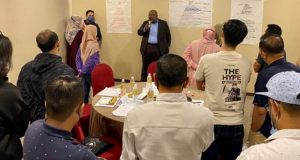
Transforming Organizational Decision-Making
How Personality Type and Systematic Frameworks Improve Decisions
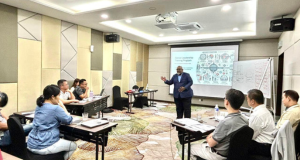
Hidden Bridge Between Personality Type and Emotional Intelligence
Behind every reaction, connection and misunderstanding lies a hidden pattern,your Psychological Type!